Tuesday, May 29, 2012

Pannus in Dogs

Rocky

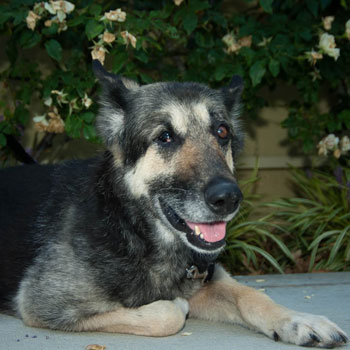
Rocky was out this weekend and he is even more handsome in person than in these photos!   Rocky is sweet as can be and has a noble soul.   He also has Pannus, so his eyes appear cloudy, and his eyesight is affected.   We think that he can see shadows, but we are still getting to know him.   He does reach forward for kisses, that is for sure.  

Because Pannus is more prevalent in Shepherds then most other breeds, we thought we would put some information out.   

After you read this, go check out Rocky on our site-

http://www.gsroc.org/available_dogs_detail.asp?ID=2371
   

Overview
Pannus, also known as chronic superficial keratitis, is a condition affecting the cornea and third eyelid of a dog’s eye(s). Pannus appears as a grayish-pink film on the eye, and as the disease progresses, the cornea becomes opaque. It most often affects both eyes.
While the exact causes that lead to pannus are not fully understood, there are some factors that can contribute to disease:
  • Exposure to airborne irritants
  • Eyelashes that turn inward (entropion)
  • High altitudes
  • Being exposed to large amounts of direct sunlight
  • Immune-mediated inflammation
  • Underlying eye conditions
German shepherds and Belgian Tervurens have the highest rate of prevalence for pannus, but it may occur in any breed or mix of breeds.
Symptoms
If your pooch develops pannus, you may see the following symptoms:
  • A grayish-pink film on the eye(s)
  • Redness and tearing
  • Cornea pigmentation (dark brown)
  • Opacity of cornea
Diagnosis
In order to diagnose your dog’s eye condition, your veterinarian will perform a complete history, physical exam, and eye exam. Additionally, he or she may recommend the following, depending on your dog’s specific needs:
  • A separate visit to a veterinary ophthalmologist, who specializes in eye diseases
  • A Schirmer Tear Test to measure tear production
  • Fluorescent staining of the eye to rule out an ulceration of the eye
  • Cytology (microscopic evaluation of cells) on samples obtained by “scraping” the cornea and/or lining of the eye (coniunctiva).
Blood tests may be recommended to determine the underlying cause. These may include:
  • Chemistry tests to evaluate kidney, liver, and pancreatic disease and function, as well as sugar levels
  • A complete blood count to rule out infection, inflammation, anemia, and other conditions
  • Sceening tests to rule out infectious disease, such as Lyme disease
  • Specialty tests: cultures and PCR testing
Treatment
Pannus typically requires lifelong treatment, but most cases respond reasonably well with good owner compliance and regular monitoring by a veterinarian. Treatment often includes the use of topical corticosteroids and other eye medications. In extreme cases, surgery or radiation therapy may be used.
Dogs with pannus require ongoing medication to prevent the eye lesions from returning. They also need to receive regular eye exams to identify if any flare-ups occur, once the pannus is under control.
Prevention
While the cause of pannus can vary, two environmental factors are known to contribute to its taking root:
  • Altitude
  • Exposure to bright sunlight
While you may not be able to move to a lower altitude, you can manage the amount of sunlight your best friend is exposed to, if your veterinarian thinks your pet is at risk. If you are worried about your dog developing pannus, talk to your veterinarian—your key resource for information about the health and well-being of your pet

If you are outside in the sunlight a lot, you may want to consider some doggie googles.   Pannus can be treated, so if you suspect you have a dog with Pannus, please see your vet. 

Sunday, May 27, 2012

Happy Memorial Day!  
GSROC salutes all who have served and protected our freedoms. 

Friday, May 25, 2012

What does your dog eat?


In a desperate attempt to get some crosstalk and comments on this blog, I was going to start off this post saying that I feed my dogs Old Roy dog food from Walmart and I think it is the best dog food around...however, I don't want anyone to read just that line and go buy that food and feed it to their dogs.  I do not, have not and will not feed that food to my dogs.  
I do love talking to people about what they do feed their dogs.  I love how passionate some people are, and how knowledgeable the public in general is getting about dog food.  It can be a real journey...deciding what to feed your dogs.   My journey has taken me from feeding my first shepherd (who I had while I was in my early 20's and admittedly ignorant) dry dog food and pretty much whatever I was eating that day (shame), to a raw diet, to now cooking meat and veggies for my babies and supplementing their dry kibble.  At one point in time I had 4 different kinds of kibble to cater to each of my dogs needs... no grain, no chicken, small kibble, big kibble... it gets exhausting.   I realized it was exhausting for them as well when I would put down these bowls with meat, actual meat in it and they would sniff and walk away.  UGH.   We have now worked out a menu plan that works for everyone, and my husband doesn't constantly grumble that I spend more time on the dogs meals than his. 
I did spend some time talking to someone who makes a very high end dog food and is a nutritionist and chemist.   He taught me about a couple easy foods that you can feed to a healthy dog on a regular basis that can be very good for them-

  • pumpkin- it is very good for their digestive system, and their eyes, and their coats.   You can buy the canned pumpkin seasonally at the grocery store.  Make sure you get the plain pumpkin, not the pumpkin pie filler.  You can also get or grow fresh pumpkins and roast it and freeze it. 

  • carrots-depending on the size of your dog, you can just give them whole carrots to munch on.   It is great for their teeth and eyes. 

  •  peas-throw a handful in their food.  It adds flavor and is good for them. 


The type of dry dog food you choose for your dog is so important.   I know that many dogs across the country eat dog food from the grocery store and do just fine.   Personally, I want all dogs to thrive.  At GSROC we have learned that feeding a higher quality food that is more in keeping with what dogs have evolved from helps to reduce any proclivity the dog has to allergies, ear infections, digestive problems and a plethora of other health issues.   We have also found that higher end foods have much less "filler food" in them so you actually feed less... and clean up less messes.  

You all know the saying..."you are what you eat".  

Here is a link to a great website that rates different dry foods-


We would love to hear what you think about dog food.   Do you feed your dogs a raw diet?   Do you give your dog "people" food?    Have you ever had a dog with allergies and how did you work out it out? 


Thursday, May 24, 2012

Come back here NOW!


While we at GSROC do not condone or advise walking a dog off leash at all, most pet owners have had the experience of your dog slipping past you, your partner or your kids at the door to get out to a family member in front of the house.   Most shepherds, NOT ALL, but most, by the time they hit 2 years old will just hang out until you decide to go in...but before they hit two years old, no matter how many obedience classes you have done, will run-and stay JUST out of your reach.  I know I have been that crazy lady running down the street exactly 3 feet behind my dog screaming her name and she just keeps running, suddenly completely deaf to my voice.   Then, all of a sudden,  5 or 6 houses down her hearing comes back and she stops and waits for me and the impending scolding and walk of shame back home.  


I bring this up because the other day I was standing out on my street, and one of my lovely (I mean it, I like her) neighbors comes driving up the street on her way out...and right behind her...loping and easily keeping up with her car is her 10 month old LAB.   Big grin and happy as can be to be going out on a run with mom.   We all waved her down, and she stopped immediately.   She was terribly embarrassed, mad and also amused... you know the feeling.   So she finally gets Max (names have been changed to protect the innocent) in the car and heads home. 
Everyone who had a dog just offered her words of encouragement and smiles...I am sure many of us were secretly thankful it wasn't us.  
What I did find interesting was that although we probably all had advice, or a good trainer we could recommend, or whatever...we all just gave her support and sent out some quiet love.   That is the part of the dog world that I love.  
Having a dog, or two, or three, or uhhmmm, four can be a lot of work, but in additon to the joy the dogs bring-the love, the smiles, the camaraderie from fellow dog lovers you get when you are out and about... totally worth it.  

Wednesday, May 23, 2012

Another reason to spay your dogs

Whenever you talk to someone who does rescue work, the topic of spaying and neutering will inevitably come up.   The most talked about reason for spaying and neutering in the rescue world is so that we can stop the needless deaths of the millions of animals who die in shelters every year across America...but if that isn't reason enough for you, let me tell you a story. 
This week, I received a call from a friend who works with a vet as an assistant.  They got a call about a dog in distress.  Because they were a mobile vet, they headed over.  
The dog was very, very sick.   She was laying under a chair in the backyard-unresponsive.  After several tries, she lifted up her head for a second as if to say "Help me".   It was discovered that the dog had never been spayed, had stopped eating, and was bleeding from her vulva.   She had Pyometra.  Her uterine lining had become infected, and the toxins were shutting down her organs.   And now she was dying slowly as her body was taken over by the toxins in her body.   This little girl was given the relief she needed and went to the Rainbow Bridge.  The tragedy is that had this little girl been spayed, she would have not suffered like this. 
This is an example of the health risks that come with not Spaying a dog early in her life. 

Pyometra

Pyometra is a result of hormonal and structural changes in the uterus lining. This can happen at any age, whether she has bred or not, and whether it is her 1st or 10th heat (although it becomes more common as the dog gets older).
After a heat, bacteria (especially E. coli) that have migrated from the vagina into the uterus find the environment favorable to growth, especially since progesterone also causes mucus secretion, closes the cervix (preventing uterine drainage), and decreases uterine contractility. The condition of the cervix is a major factor in the severity of the condition.
  • If the cervix is open, the infected material can leave the body, and this is far easier and safer to treat. This is known as open pyometra.
  • If the cervix is fully closed, there is no discharge from the vulva, and like in appendicitis, the uterus may rupture and pus escapes into the abdomen, causing peritonitis and possible rapid death. This is known as closed pyometra.
Surgical treatment
Spaying (ovariohysterectomy) completely and promptly removes the infection, prevents uterine rupture and peritonitis, and of course prevents recurrence, in most cases. Spayed animals do very rarely develop pyometra in the uterine stump. Even so, ovariohysterectomy is currently considered the most effective and safest treatment.

PYOMETRA PREVENTATIVE-100% EFFECTIVE-

Spay your dog.   Spay your dog by 6 months of age.    Don't BREED your dog. 

RIP Scarlett.  


Wednesday, May 16, 2012

Some common misconceptions about German Shepherds

Breed Misconceptions | The German Shepherd  

Here are a few myths about German Shepherd dogs-

Myth #1. Puppies are better than adult dogs – especially if I have small children.

Truth #1. Everyone loves a puppy, and while small children may coo and awww over the sight of a newborn puppy, putting two separate creatures with reduced impulse-control together is more likely to result in chaos than it is in adorable photographs. Getting a puppy for your child is putting a dog  – with no impulse control and no sense of what the world is like – with a scary, undisciplined figure who might very well hurt it. That is not to say that puppies and babies are incompatible, but potential dog owners should monitor the situation carefully and consider either waiting until the child is older to adopt a dog or adopting an older, more experienced dog who is less likely to snap if, for example, a child pulls his tail or prods him repeatedly. German Shepherd puppies are not necessarily aggressive, but most puppies do have a proclivity to harmless nipping and chewing that might not bother an adult, but might damage the sensitive skin of a toddler, or destroy the lining on her favorite stuffed toy.   Bottom line, if you have young kids, don't pass over that older dog who may actually make your life easier... 


Myth #2. FEMALES HAVE FEWER DOMINANCE ISSUES THAN MALES

Truth #2. Another untrue myth that leads to much disappointment and disillusionment among dog owners. Female dogs, like female humans, are no more likely to be meek or docile than their masculine counterparts. In fact,  female dogs are commonly more alpha than their male counterparts. They are certainly not to be underestimated.  (Just like human females, eh?) Male dogs can be just as laid-back and mellow as female dogs – perhaps more so, if they have been properly neutered – and female dogs can be very alpha.


Myth #3. SPAYING MY DOG IS INHUMANE – I WANT HIM/HER TO HAVE PUPPIES

Truth #3.No, what's actually inhumane is subjecting a dog to the perils of breeding, and all the health risks that go with not altering your dog.  In addition,  bringing a litter of puppies you are unable to healthily cope with into the world is not fair.  Millions of "purebred" dogs die in shelters every year.  Not only does spaying and neutering drastically reduce the risk of violence and aggression in your German Shepherd dogs, but it also protects both you and your pets from the risks of more homeless puppies and dogs in this world. Furthermore, dogs that are neutered are more pleasant companions, happier dogs. Spaying or neutering your dog puts them at diminished risk for many related illnesses.  Spay your dogs, and be a part of the solution, not the problem.   Before you breed your dog, go walk an animal shelter or check out our website www.gsroc.org.